BarraCUDA Draws HN Attention: A C99 CUDA Compiler That Emits AMD GFX11 Binaries Without LLVM
Original: BarraCUDA Open-source CUDA compiler targeting AMD GPUs View original →
Why this HN post stood out
A Hacker News post titled BarraCUDA Open-source CUDA compiler targeting AMD GPUs reached 420 points and 175 comments at crawl time. The linked project positions itself as a direct CUDA-to-AMD compiler rather than a compatibility shim, which explains the strong developer interest. In practical terms, it means the tool accepts `.cu` input and produces AMD-ready ELF `.hsaco` output for RDNA 3 GFX11 targets.
What the project claims technically
The project README describes BarraCUDA as roughly 15,000 lines of C99 with no LLVM dependency in the compilation path. The documented pipeline includes preprocessing, lexing, recursive-descent parsing, semantic analysis, a custom SSA-style IR (BIR), mem2reg lowering, instruction selection, register allocation, and binary emission. The author also states instruction encodings were checked against `llvm-objdump`, even though LLVM is not used to generate binaries.
Feature coverage listed in the README is broader than a toy compiler: `__global__`/`__device__`, CUDA thread/block builtins, `__shared__` memory, `__syncthreads()`, multiple atomics, warp shuffle/vote intrinsics, and basic cooperative groups support. If accurate under production kernels, that puts BarraCUDA in a meaningful prototype category rather than a parser demo.
Current limits and engineering signal
The same README is explicit about current gaps, including missing support for some C/CUDA syntax pieces such as bare `unsigned`, compound assignment operators, `const` qualifier handling, `__constant__` memory, and dynamic parallelism. This transparency is useful: teams evaluating early compiler projects can quickly judge fitness for their codebases instead of inferring support from marketing language.
The repository metadata also shows rapid early momentum, with creation on 2026-02-16 and continued pushes through 2026-02-18. Combined with Apache-2.0 licensing, BarraCUDA has become a notable experiment in reducing tooling dependence on vendor-default CUDA stacks. The broader implication is strategic: even partial alternatives can pressure the GPU software ecosystem toward more portable compilation paths.
Sources: Hacker News thread · BarraCUDA repository
Related Articles
The Debian debate is really about accountability: who owns licensing, security, disclosure, and review when AI-assisted work enters a distribution.
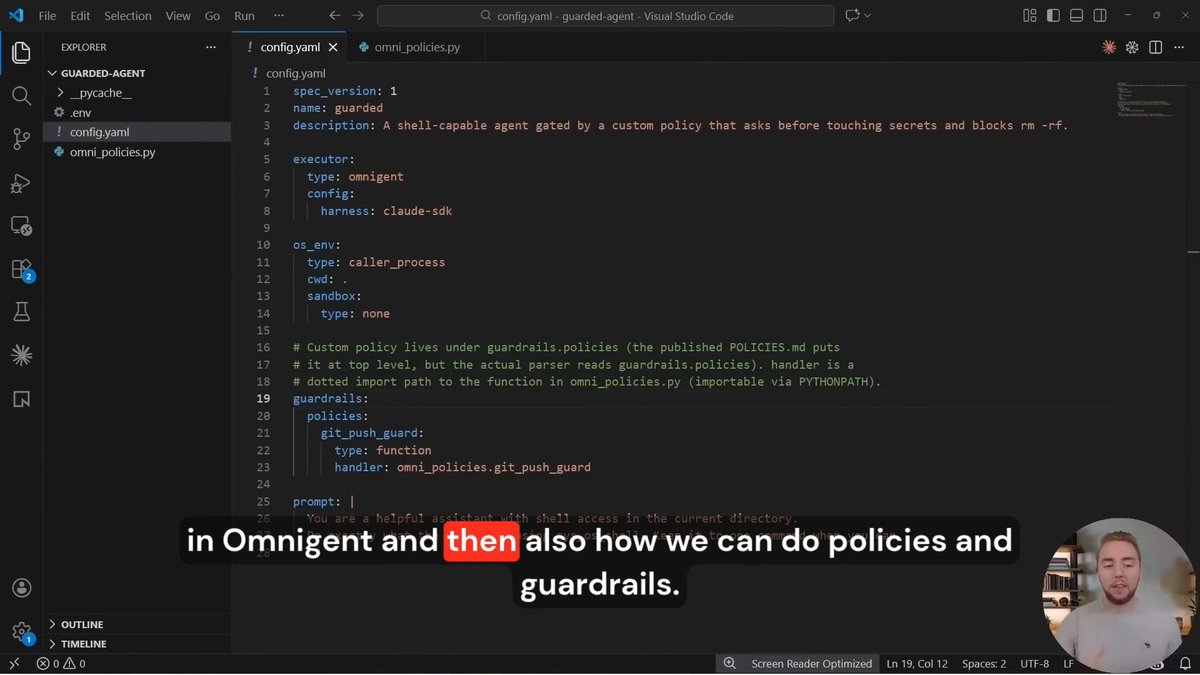
AI coding is shifting from picking one assistant to orchestrating several agents. Omnigent is an open-source meta-harness with shared sessions, guardrails, and human-in-the-loop workflows.
The coding-agent race is becoming more inspectable. xAI says it has open-sourced Grok Build, published the CLI code path, and reset usage limits for all users.