Perplexity Launches Model Council — Parallel AI Models Reduce Hallucinations
Model Council Launch
Perplexity launched Model Council, a revolutionary system that runs multiple frontier AI models in parallel including Claude, GPT-5.2, and Gemini to generate unified, cross-validated answers.
This approach overcomes the limitations of single models and combines the strengths of multiple models to provide more reliable results.
How It Works
The core mechanism of Model Council:
- Parallel execution: User queries are sent simultaneously to multiple frontier models
- Independent reasoning: Each model generates answers independently
- Cross-validation: Answers from models are compared for agreement
- Unified answer: Final answer generated based on consensus information
This process allows even if one model generates incorrect information (hallucinates), other models can detect and correct it.
Performance Improvements
Perplexity states Model Council delivers these improvements:
- Reasoning quality: Significantly improved through collective intelligence of multiple models
- Reduced hallucinations: Cross-validation minimizes incorrect information generation
- Reliability: Answers agreed upon by multiple models are more trustworthy
The system's advantages are particularly pronounced for complex questions or situations where fact-checking is critical.
Cost and Performance Tradeoffs
Model Council is innovative but has clear tradeoffs:
Advantages:
- Higher accuracy and reliability
- Reduced hallucination errors
- Combined strengths of multiple models
Disadvantages:
- Increased computing costs from running multiple models simultaneously
- Potentially longer response times
- Increased operational complexity
Perplexity appears to have determined these additional costs are justified by the value provided to users.
AI Industry Trend
Model Council reflects an important AI industry trend:
Moving beyond single model dependence: Rather than finding one "best" model, achieving better results through collaboration of multiple models.
Ensemble approach: Applying ensemble techniques long used in machine learning to LLMs. Combining predictions from multiple models generally yields better performance than a single model.
Reliability first: Movement toward prioritizing accuracy and reliability over speed or cost.
Competitor Response
Other AI companies are likely experimenting with similar approaches:
- OpenAI: Already offers multiple models like GPT-4o and o3-mini, likely using ensemble techniques internally
- Anthropic: Utilizes consensus mechanisms between models in Constitutional AI
- Google: Potential for multi-model validation in Gemini series
Perplexity's public launch of this as a feature appears to be part of a differentiation strategy.
User Experience
From a user perspective, Model Council provides:
- More trustworthy answers
- Particularly useful in fields where fact-checking is important: research, healthcare, legal, etc.
- Quality improvement worth accepting slightly slower response times
Perplexity is a company with strengths in Retrieval-Augmented Generation (RAG), and Model Council further strengthens these advantages.
Sources
Related Articles
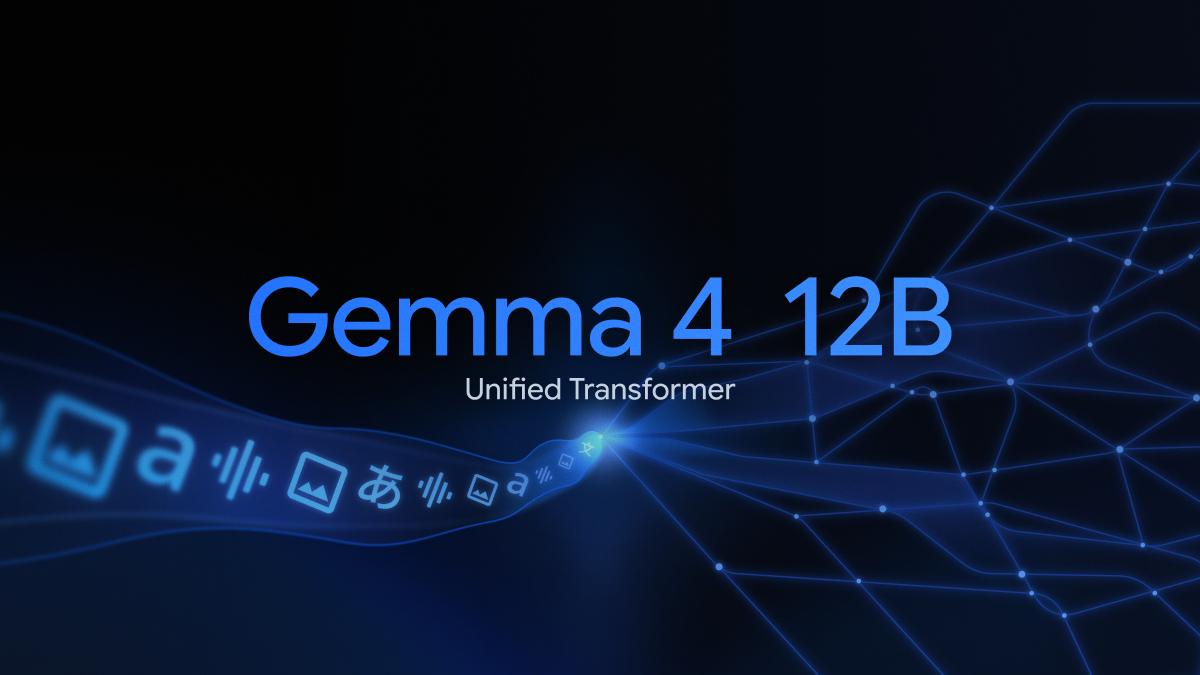
The thread’s energy centered on the architecture claim: what does “encoder-free” really mean for a 12B multimodal model?

Local multimodal AI is moving into the 12B class. Google Gemma introduced Gemma 4 12B under Apache 2.0, describing a unified encoder-free design for image, audio, and text inputs.

Open-model competition is shifting from leaderboard scores to agent operating costs. NVIDIA says Nemotron 3 Ultra is a 550B MoE model with 5x faster inference and up to 30% lower cost for complex agentic tasks.