Perplexity turns its API into a full-stack, model-agnostic platform for agents
Original: The Perplexity API platform is now a full-stack, model-agnostic API platform for building agents. It replaces your model provider, search layer, and embeddings, built on the same infrastructure that powers Perplexity. View original →
What Perplexity announced on X
On March 11, 2026, Perplexity said its API offering is now a full-stack, model-agnostic platform for building agents. The company framed the shift as a consolidation play: instead of wiring together a model provider, search layer, retrieval stack, and execution environment from separate vendors, developers can buy more of that stack directly from Perplexity.
The main X post focused on platform positioning, but the follow-up thread made the product shape more concrete. Perplexity said one API key now spans Agent API, Search API, Embeddings API, and a coming Sandbox API. In that description, Agent API is the orchestration layer for multi-step workflows, Search API provides real-time web context with citations, Embeddings API handles retrieval, and Sandbox is meant to add deterministic code execution for agents.
What the official docs confirm
Perplexity documentation now exposes quickstarts for Agent API, Search API, and Embeddings API from a single platform overview. The docs describe Agent API as access to third-party models with web-search tools and presets, Search API as raw ranked web results with filtering and real-time data, and Embeddings API as infrastructure for semantic retrieval. Recent changelog entries also show separate rollouts for Agent API and Embeddings API, which supports the view that Perplexity is assembling a broader developer platform rather than shipping isolated endpoints.
- Perplexity said on X that Search API is state of the art on SimpleQA and SEAL, backed by an index covering more than 200B+ URLs refreshed in real time.
- The same thread says pplx-embed-v1-4B leads MTEB retrieval, ConTEB, and internal benchmarks against corpora above 30 million documents.
- Perplexity also said Sandbox API will first appear as a tool inside Agent API before being exposed as a standalone service.
Why this matters for developers
The practical significance is control over agent complexity. Most teams building agents still compose separate model, search, retrieval, and tool-execution providers, which increases operational surface area and makes cost, latency, and tracing harder to manage. Perplexity is betting that a vertically integrated API can reduce that assembly burden.
There is also a competitive angle. By emphasizing model-agnostic orchestration instead of a single-house model, Perplexity is trying to position its API layer as infrastructure rather than just another inference endpoint. Whether that works will depend on two things the X thread does not settle on its own: how well the benchmark and scale claims translate to customer workloads, and whether developers actually prefer a bundled agent stack over a more modular architecture.
Sources: Perplexity X post, Perplexity docs overview, Perplexity changelog
Related Articles
Perplexity announced on February 26, 2026 that `pplx-embed-v1` and `pplx-embed-context-v1` are now available in 0.6B and 4B variants. The company positions the release as retrieval-first infrastructure with quantized embeddings and benchmark-focused performance claims.
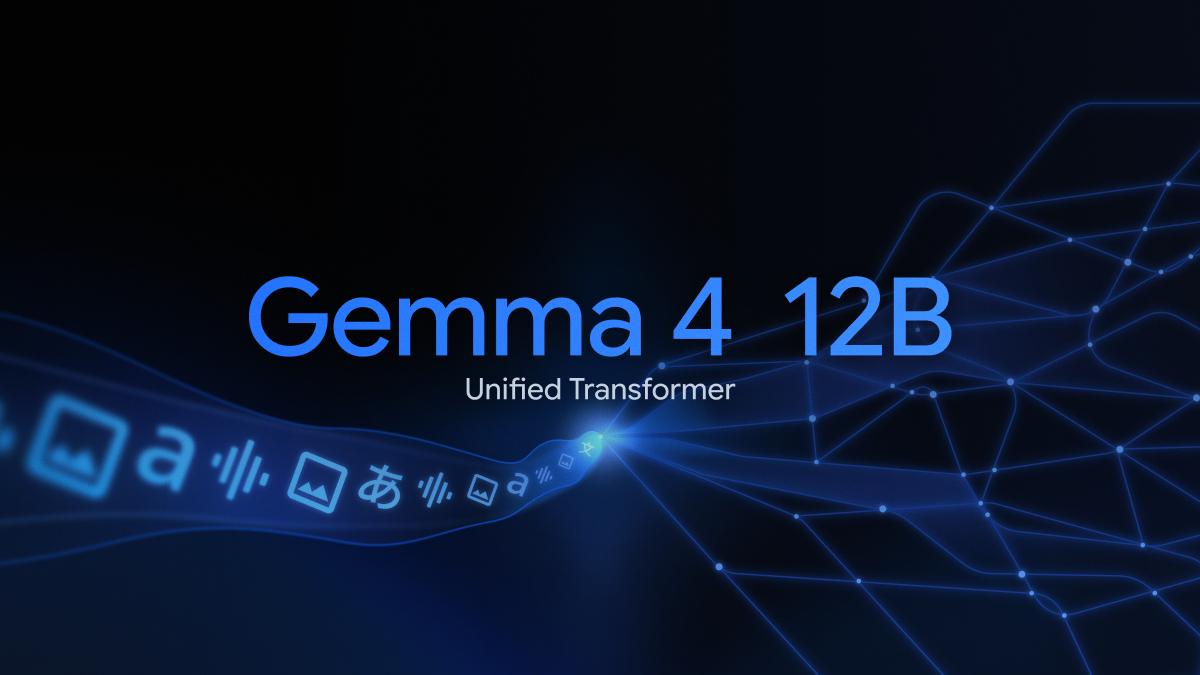
The thread’s energy centered on the architecture claim: what does “encoder-free” really mean for a 12B multimodal model?

Local multimodal AI is moving into the 12B class. Google Gemma introduced Gemma 4 12B under Apache 2.0, describing a unified encoder-free design for image, audio, and text inputs.