Databricks puts coding agents behind Unity AI Gateway controls
Original: The era of production-ready coding agents is here, but so is the risk of coding agent sprawl. Today, we’re introducing Coding Agent Support in Unity AI Gateway to bring these tools under a unified governance layer: - Centralized Governance across coding agents, LLM interactions and MCP integrations - Simplified cost management with ability to control rate limits and budgets for every single coding tool. - Unified observability for AI Coding Tools that gives real-time insights into code metrics and costs View original →
What the tweet revealed
Databricks used an April 17 X post to frame a new enterprise problem: coding agents are becoming production tools, but unmanaged adoption can scatter credentials, costs, and audit trails across teams. The core line was concise: The era of production-ready coding agents is here. The company then pointed readers to Coding Agent Support in Unity AI Gateway, a control layer for agentic development tools.
The post is material because Databricks usually uses its X account for product updates around the Lakehouse, Mosaic AI, Unity Catalog, and enterprise data governance. Here the topic is not a new model. It is operational control over the tools that invoke models, call MCP servers, generate code, and run inside developer workflows.
What the linked blog adds
The supporting Databricks blog says Unity AI Gateway is being extended to coding agents so organizations can route agent traffic through centralized governance. The concrete controls are useful: policy over coding agents and MCP integrations, cost management through rate limits and token budgets, and observability for code metrics and spend. In other words, the gateway becomes a management plane for tools that might otherwise be installed one team at a time.
That matters for companies already standardizing on Unity Catalog. Coding agents do not just answer prompts; they read repositories, call build systems, create pull requests, and increasingly connect to internal data. A gateway that can see which tool is calling which model, under what budget, and through which integration is a prerequisite for treating those agents as enterprise software rather than side-channel automation.
What to watch next
The next test is whether this control layer works across the messy mix of IDE plugins, CLI agents, hosted coding tools, and internal MCP servers developers actually use. Watch for how Databricks handles policy exceptions, per-team budgets, and audit exports. The bigger signal is that coding-agent governance is becoming a platform category of its own.
Sources: source tweet, Databricks blog.
Related Articles
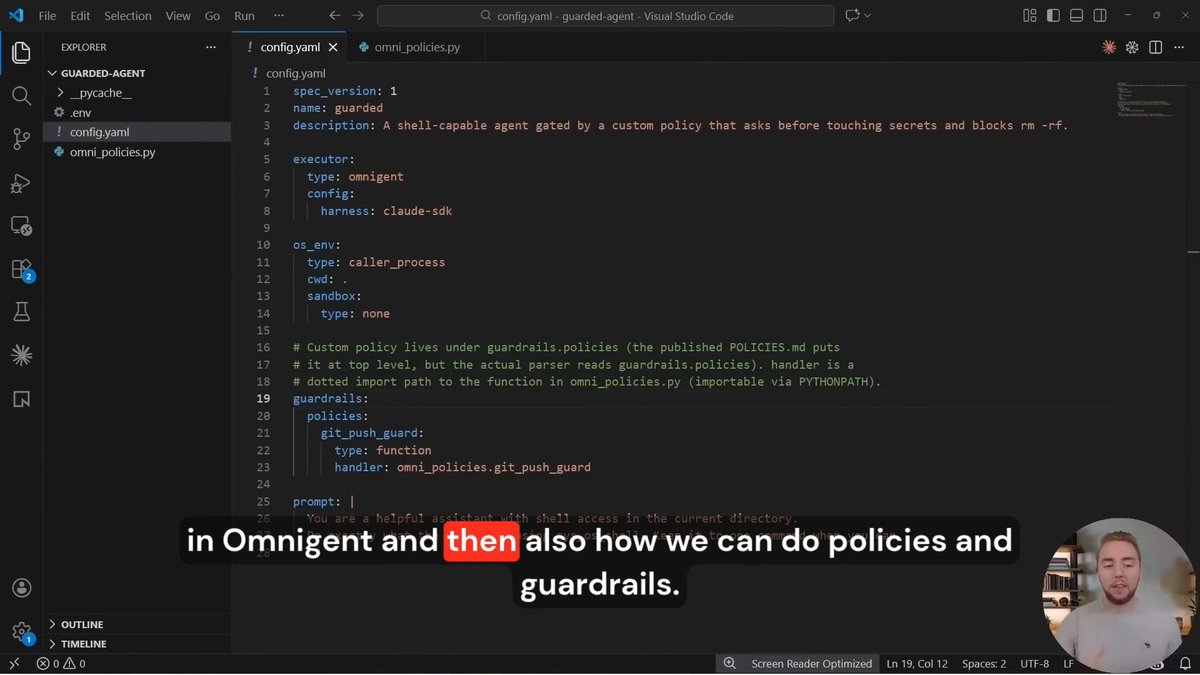
AI coding이 단일 assistant 경쟁에서 orchestration 문제로 넘어가고 있다. Omnigent는 여러 coding agent를 같은 세션에서 조율하고 guardrails와 human-in-the-loop 절차를 묶는 open-source meta-harness다.
코딩 에이전트가 실제 명령을 실행해야 유용하지만, 로컬 머신을 그대로 맡기는 불안도 커졌다. Clawk는 권한 프롬프트 대신 일회용 VM과 네트워크 allow-list로 경계를 세우는 접근을 제안한다.
Google은 coding agents가 model training data cutoff 때문에 오래된 Gemini API 코드를 생성할 수 있다고 보고, 이를 해결하는 수단으로 Docs MCP와 Developer Skills를 함께 제시했다. 두 도구를 같이 쓰면 eval set에서 vanilla prompting 대비 96.3% pass rate와 63% fewer tokens per correct answer를 기록했다고 회사는 밝혔다.