Figure F.03 stair test compresses two hours of autonomy work
Original: Figure F.03 stair test shows a two-hour autonomy stress run View original →

A longer look at a simple-looking task
Figure’s latest F.03 video matters because it points at endurance, not just a clean demo. Brett Adcock posted at 2026-06-12 18:26:55 UTC that F.03 had repeatedly walked up and down stairs in a 2 hour timelapse. FxTwitter metadata shows the attached media is about 693.8 seconds long, while the post describes the underlying run as a two-hour repeated test. That distinction is important: the useful signal is not that the robot can take a few steps on stairs, but that Figure is exercising autonomy over repeated cycles.
“Here’s a 2 hour timelapse of F.03.”
Adcock’s account is a founder-level channel for Figure, often used to show engineering progress before it appears in formal product material. In this post he wrote that making autonomy look simple takes a lot of engineering, and that Figure HQ is full of tests like this. The claim is modest but meaningful. Humanoid robots fail in the gaps between demo conditions: small foot-placement errors, changing camera angles, balance recovery, friction shifts, thermal limits, and the accumulation of tiny control mistakes over time.
Why stairs are a useful stress test
Stairs are familiar to people and unforgiving for robots. A flat-floor walk can tolerate more drift; a stair step gives less margin for foot placement, center of mass, and timing. Repeating that task for two hours is closer to a product question than a viral clip. If a humanoid is meant to work in warehouses, stores, factories, or homes, the question is not whether it can complete one impressive motion. The question is whether it can keep moving, recover, and avoid creating new supervision work for humans.
What to watch next is whether Figure turns this kind of lab test into field numbers: intervention rate, fall rate, uptime, battery behavior, and performance across different stair geometries. A long timelapse is useful evidence, but customers will eventually need metrics that compare F.03 with wheeled robots, fixed automation, and human workers. Source: Brett Adcock source tweet
Related Articles
Humanoid robot tests are moving from isolated demos into factory workflows. Figure said Figure 03 has started performing logistics work at BMW Group Plant Spartanburg, a 10-million-square-foot campus with more than 11,000 associates.
Figure published new Helix 02 results on March 9, 2026 showing a single neural system cleaning an entire living room from pixels. Figure says the system combines walking, object handling, tool use and real-time planning without introducing new task-specific algorithms.
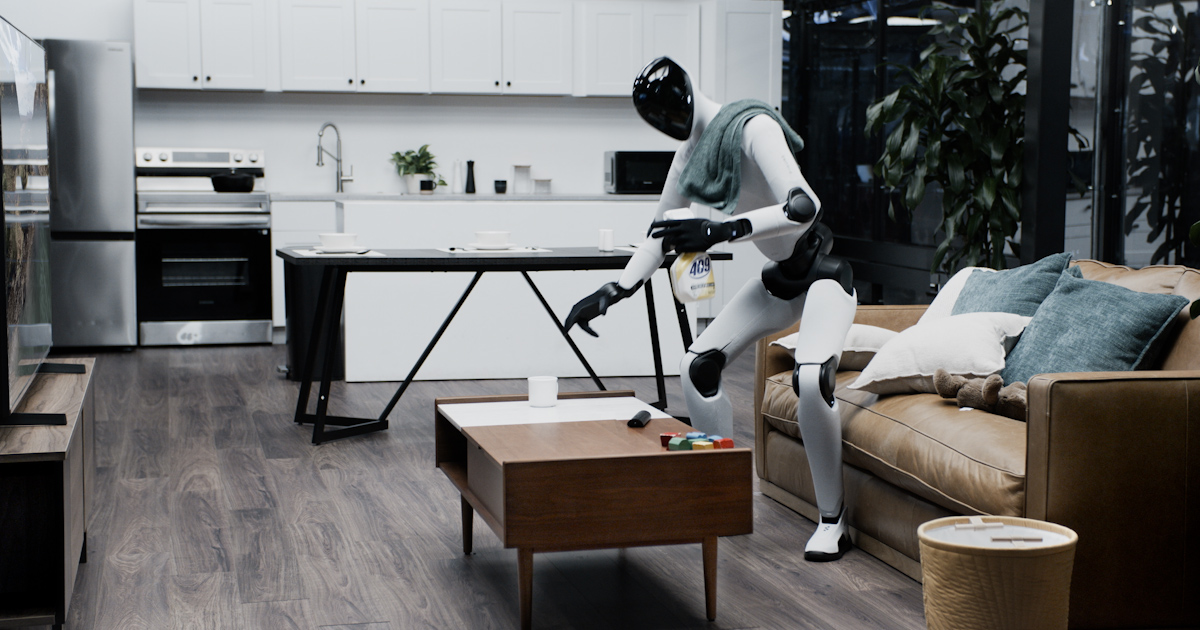
Figure used a March 9, 2026 X post and companion article to show Helix 02 cleaning up a living room fully autonomously. By moving from the January Helix 02 kitchen demonstration into a messier home setting, the company is making a stronger case for long-horizon humanoid autonomy beyond tightly structured environments.