Gemma 4 12B puts the spotlight on encoder-free multimodal local AI
Original: Gemma 4 12B: A unified, encoder-free multimodal model View original →
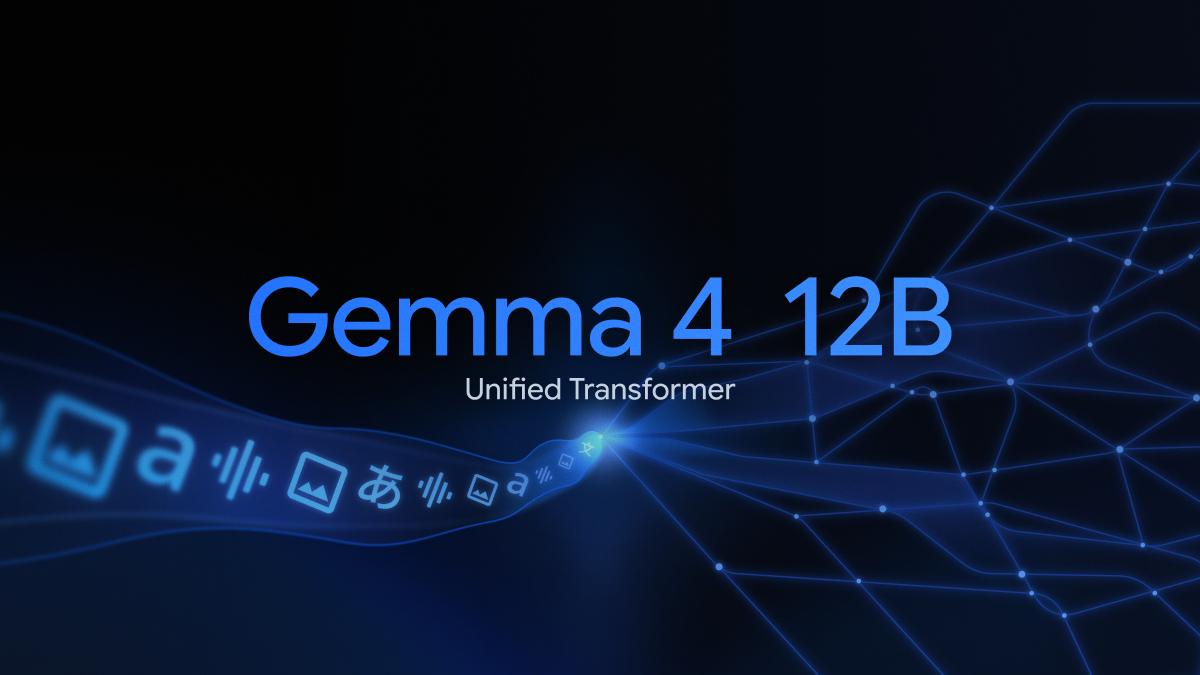
Google’s Gemma 4 12B landed as an open-weights multimodal model aimed at laptop-scale use, but the community discussion quickly moved past the release headline. The interesting part is the architecture claim: text, image, and audio inputs are handled without a dedicated multimodal encoder feeding the LLM backbone.
That wording drew scrutiny. Google describes a lightweight vision embedding module built from a matrix multiplication, positional embedding, and normalization rather than a separate vision model such as SigLIP. HN commenters focused on that distinction: the model is not magically skipping representation work, but it does appear to avoid the heavier “separate encoder plus language model” design that has defined many multimodal systems.
The 12B size also matters. A large MoE model may be more exciting on paper, but 12B is the range where local users can realistically test document workflows, image QA, and small agent loops on consumer hardware. Google says Gemma 4 keeps multilingual support and offers both pre-trained and instruction-tuned open-weight variants, with a context window up to 256K tokens.
The result is a release whose first serious questions are not just “how does it score?” but “how does it work?” Commenters asked whether the lightweight module is robust enough, how support differs across Mac and non-Mac runtimes, and what everyday use cases justify this class of local multimodal model. That is a healthier kind of launch discussion: architecture, portability, and practical workload fit before leaderboard theater.
Related Articles
The HN debate was not just “old hardware still works.” A patched ik_llama.cpp path got Gemma 4 26B-A4B running CPU-only on dual Ivy Bridge Xeons, raising practical questions about local inference cost, control, and fallback capacity.
HN readers focused less on leaderboard dominance and more on the package: Thinking Machines Lab is offering a multimodal MoE with controllable reasoning effort and Tinker-based fine-tuning as an open-weight base.

Open-weight multimodal models just gained a serious new entrant. Thinking Machines released Inkling with full weights, 64K and 256K context options, and a direct fine-tuning path through Tinker.