HN likes EvanFlow for the parts it refuses to automate
Original: EvanFlow – A TDD driven feedback loop for Claude Code View original →
Hacker News did not upvote EvanFlow because test-driven development is suddenly novel again. If anything, the thread showed that the center of gravity has moved. People already assume coding agents can produce code. The harder problem is how to stop them from becoming expensive cleanup machines. According to the project README, EvanFlow wraps Claude Code in 16 skills and 2 subagents, with a single loop that runs brainstorm, plan, execute, iterate, and then stops. That last word matters. The project is openly selling control, not autonomy.
The design choices explain why the thread cared. EvanFlow treats TDD as a discipline inside each code-writing task rather than a phase that happens later. The loop pushes one failing test, minimal implementation, then refactor while the test is still fresh. For larger plans it can fork into a coder-overseer setup where implementation agents write code and read-only overseers review without editing. It also adds checkpoints for design approval, plan approval, and post-iteration review. Even the Git story is deliberately constrained: no auto-commits, no auto-staging, and a bundled hook that blocks destructive commands. That is a different pitch from most agent demos, which usually frame friction as the thing to eliminate.
HN comments split in a useful way. Skeptics argued that Claude Code's official skills already support a solid TDD workflow, so the novelty may be overstated. Supporters were less interested in the wrapper itself than in the discipline it tries to enforce. One comment zeroed in on the nastiest multi-agent failure mode: unit tests can pass inside each parallel branch while the seams fail at merge time, which is why integration tests at touchpoints need to function as the real contract. That kind of reaction says the audience was evaluating operational safety more than feature count.
That is why the thread read more like a workflow argument than a product launch. HN is no longer debating whether agents can help with coding. It is debating how to bound scope creep, context drift, and reckless automation once they do. EvanFlow's appeal is that it treats restraint as a feature. It assumes the dangerous part of agentic coding is not the absence of capability but the absence of stopping points. For a crowd that has seen enough demo magic collapse in real repositories, that is a much stronger hook than another promise of hands-free software development.
Related Articles
This was not just another “local models are bad” rant. The thread blew up because it mixed a blunt reality check with a serious counterargument: some of the pain comes from small models, but a lot of it may come from the harness wrapped around them.
An independent Claude Code dashboard says its since-launch view now covers more than 20.8 million observed commits, over 1.08 million active repositories, and 114,785 new original repositories in the last seven days. Hacker News drove the link to 274 points and 164 comments as users debated what metrics can actually capture AI coding adoption.
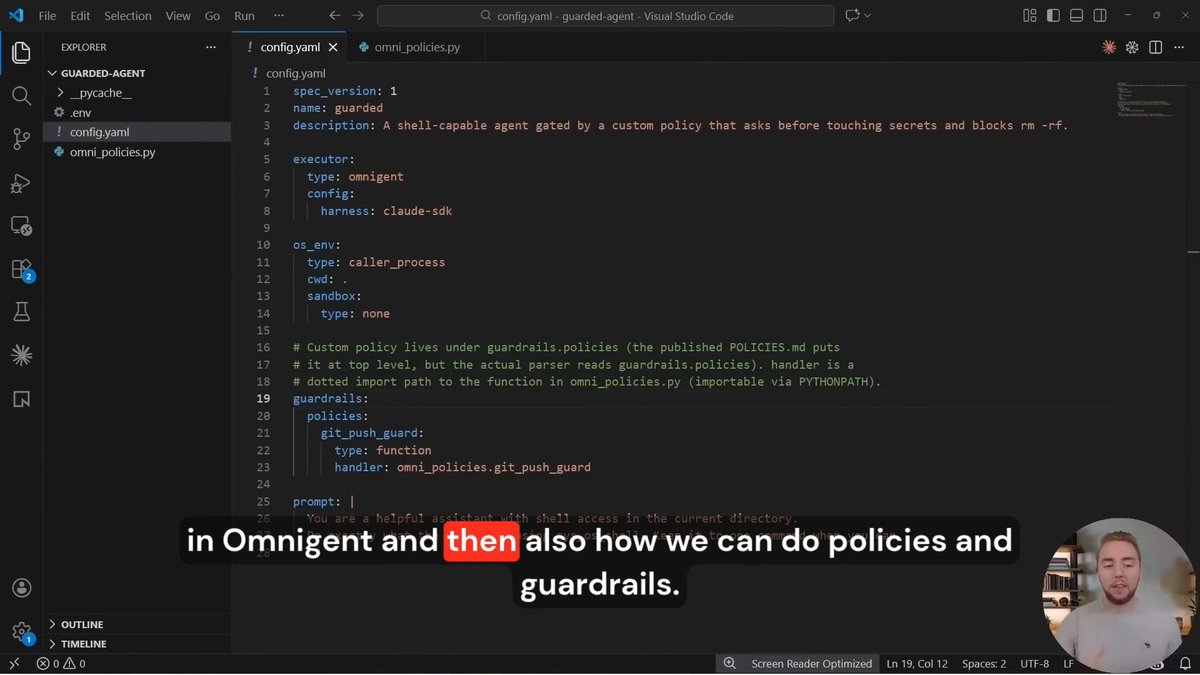
AI coding is shifting from picking one assistant to orchestrating several agents. Omnigent is an open-source meta-harness with shared sessions, guardrails, and human-in-the-loop workflows.