NVIDIA Cosmos 3 post-training lifts traffic VQA to 93.35%
Original: NVIDIA Cosmos 3 post-training lifts traffic VQA to 93.35% View original →

Benchmark result
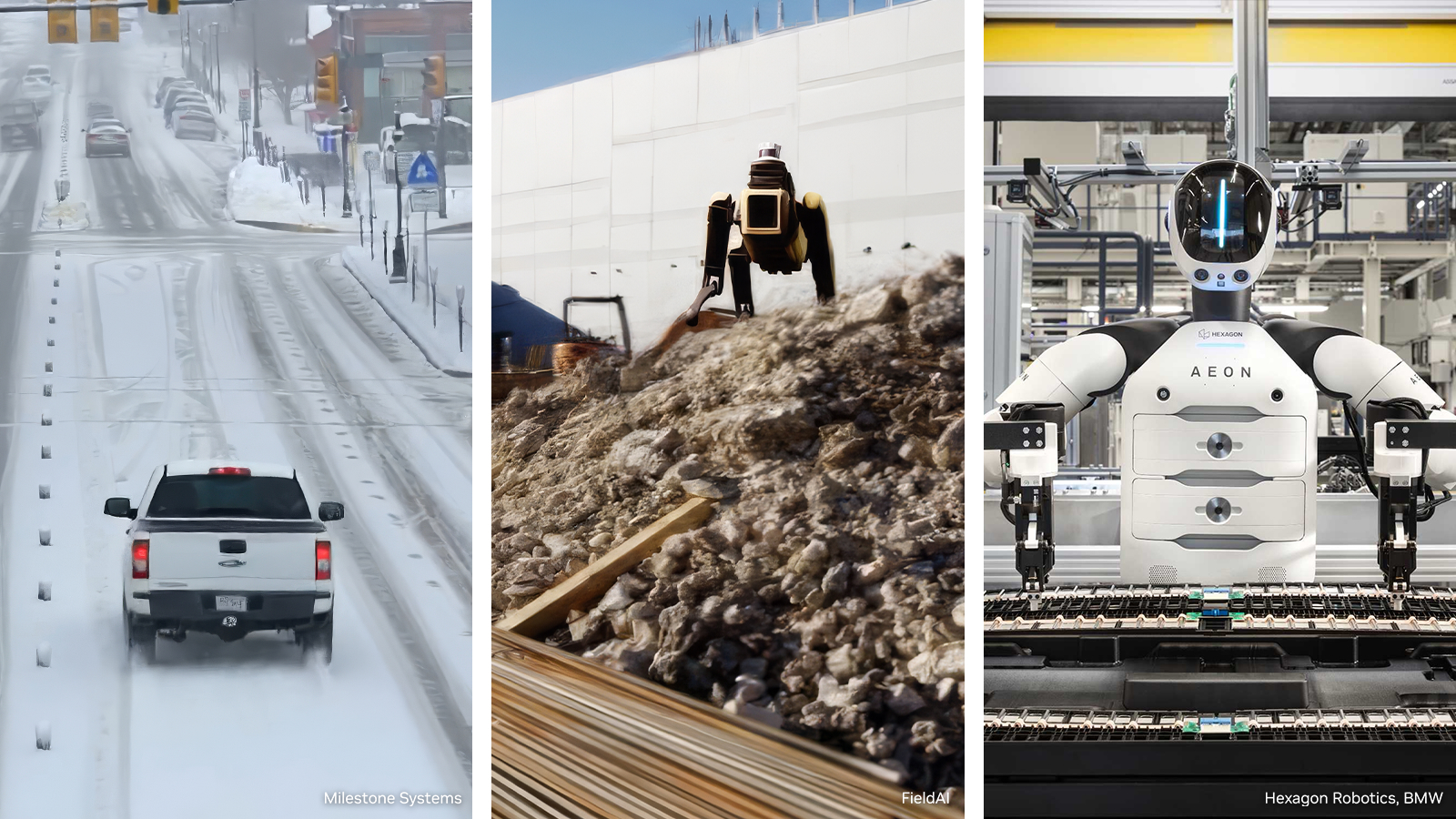
NVIDIA's latest X post turns a model-tuning workflow into a measurable physical AI result. The company wrote that after post-training Cosmos 3 Nano with LoRA, validation accuracy rose from 54.41% to 87.14%, and with TAO AutoML it reached "93.35%". The tweet was posted on July 14, 2026 and included visual comparisons from the experiment.
The linked NVIDIA Technical Blog gives the setup: Cosmos 3 Nano was adapted for video question answering on the Woven Traffic Safety dataset, a Toyota traffic-safety benchmark with more than 8,000 training and validation samples. The task is a four-way multiple-choice visual reasoning problem over road scenes, signals, vehicles, pedestrians, and context. NVIDIA says a coding agent used TAO agent skills to run baseline evaluation, patch a missing FPS parameter, generate LoRA training configs, trigger the TAO container, and then run AutoML sweeps.
The numbers are the reason this qualifies as more than a tutorial. The base model scored 54.41% exact-match accuracy, a single LoRA run reached 87.14%, and Bayesian-optimization AutoML reached 93.35%, a 38.94 percentage-point improvement over baseline. NVIDIA says the LoRA run took around 30 minutes on eight A100 GPUs, while the AutoML sweep took 19.5 hours across 43 parallel trials. Watch whether teams can reproduce similar gains outside NVIDIA's controlled workflow, especially for warehouse monitoring, autonomous vehicle perception, and robot workcells. The source tweet is available here.
Related Articles

NVIDIA Research’s MOTIVE targets a specific video-model bottleneck: which fine-tuning clips actually improve motion. The ICML 2026 honored paper reports a 74.1% human preference result against the base model.
NVIDIA detailed Vera, a CPU designed for agentic AI workloads where tool calls, code execution, retrieval, and verification sit between model calls. The company claims 50% higher IPC than Grace and 1.8x sustained per-core performance versus x86 on agentic execution workloads.
NVIDIA on March 16, 2026 introduced an open reference architecture for generating, augmenting and evaluating training data for robotics, vision AI agents and autonomous vehicles. Microsoft Azure and Nebius are integrating the blueprint, and NVIDIA said the package is expected to land on GitHub in April.