NVIDIA Highlights India Manufacturing AI Push With Global Industrial Software Partners
Original: NVIDIA and Global Industrial Software Leaders Partner With India’s Largest Manufacturers to Drive AI Boom View original →
What Was Announced
On February 17, 2026, NVIDIA published a detailed update on new collaborations with global industrial software companies and major Indian manufacturers to accelerate AI-driven industrial transformation. The announcement positions AI as an operating layer across design, simulation, manufacturing optimization, and supply-chain workflows, rather than a stand-alone analytics tool.
The company also framed the effort against India’s macro policy target: raising manufacturing’s share of GDP from around 16% to 25% by 2030. In that context, digital engineering throughput and simulation capacity are treated as economic infrastructure, not only engineering convenience.
Key Collaboration Tracks
NVIDIA said Dassault Systemes and L&T are using an NVIDIA AI factory approach to deliver augmented virtual twin experiences built on 3D UNIV+RSES and OVX systems. Siemens and TCS are combining Siemens Xcelerator assets with NVIDIA AI and accelerated computing for sector-specific industrial AI solutions. Cadence and TCS are working on faster chip and system design workflows in India.
Another notable track is Ansys and Tata Electronics, where NVIDIA Omniverse and accelerated computing are being used to improve simulation pipelines. NVIDIA said the collaboration has demonstrated up to a 6x runtime improvement in selected simulation scenarios.
Why This Is High-Signal
The significance is structural: this is not a single factory pilot, but a coordinated ecosystem update across software platforms, manufacturing operators, and national industrial goals. NVIDIA also cited NASSCOM’s projection that industrial software could contribute more than $134 billion to India’s GDP by 2030, reinforcing the economic scale behind these deployments.
For industry watchers, the story matters because digital twins and accelerated simulation are becoming central to production competitiveness. Faster and more accurate virtual validation can reduce rework, compress development cycles, and improve plant-level decision quality before physical changes are made.
The next practical signal to monitor is execution depth: how quickly these collaborations move from announced frameworks to large production rollouts, and whether participants publish measurable gains in throughput, quality, and cost. If those metrics hold, this would mark a meaningful shift from AI experimentation to AI-native industrial operations in one of the world’s largest manufacturing growth markets.
Source: NVIDIA official blog
Related Articles
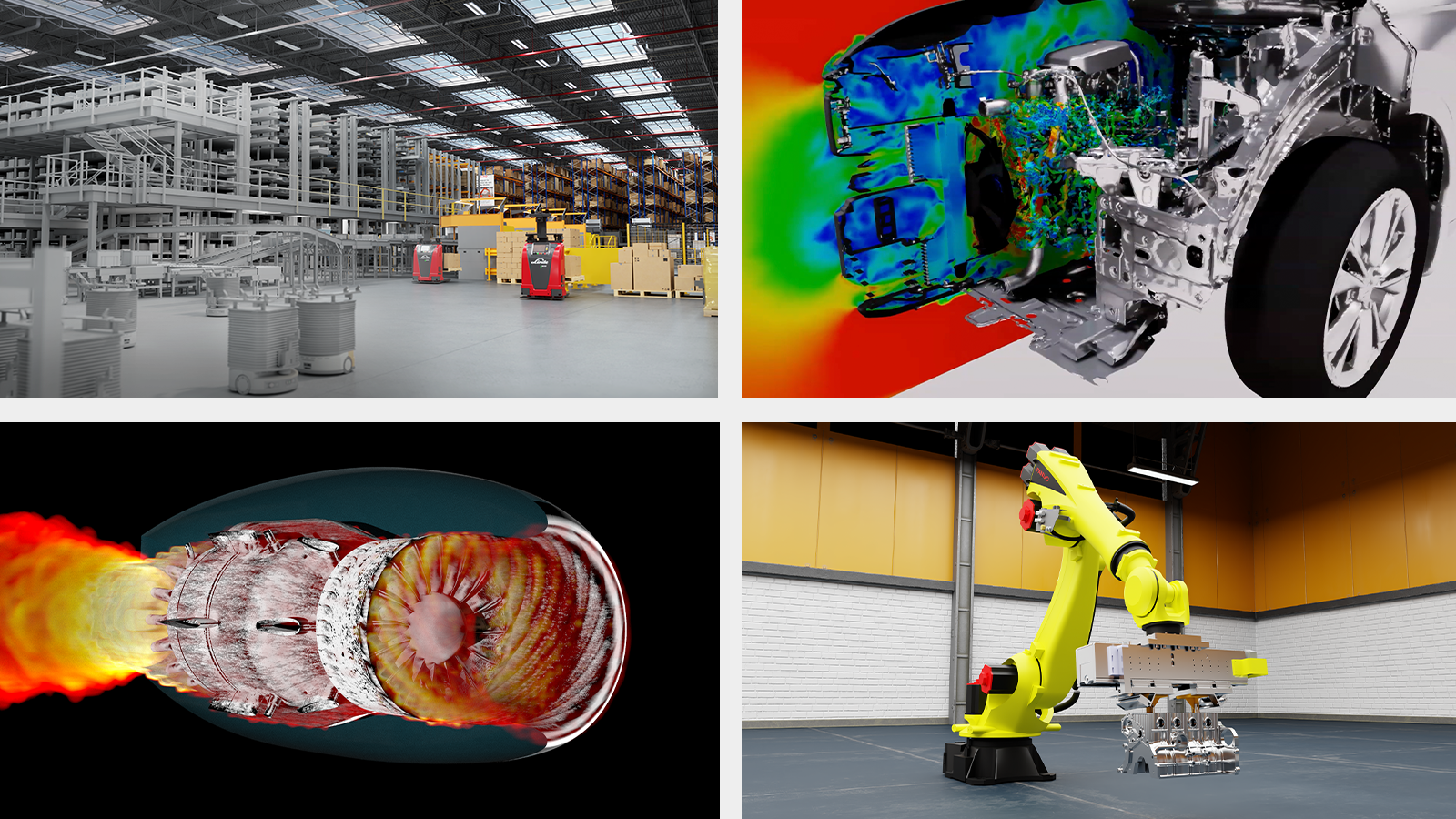
NVIDIA said on March 16, 2026 that Cadence, Dassault Systèmes, PTC, Siemens and Synopsys are bringing NVIDIA-powered AI agents and GPU-accelerated software into industrial workflows. The announcement spans chip design, automotive simulation, digital twins and manufacturing infrastructure across AWS, Google Cloud, Microsoft Azure, OCI and major OEM partners.

NAVER plans to expand GAK Sejong to 55MW and eventually toward gigawatt-scale AI factory capacity. NVIDIA’s post frames DSX as the stack for sovereign AI, HyperCLOVA X, and agentic services.
Samsung says it will transition global manufacturing into AI-Driven Factories by 2030. The roadmap combines digital twin simulations, AI agents, and in-factory companion robots to optimize production site by site.