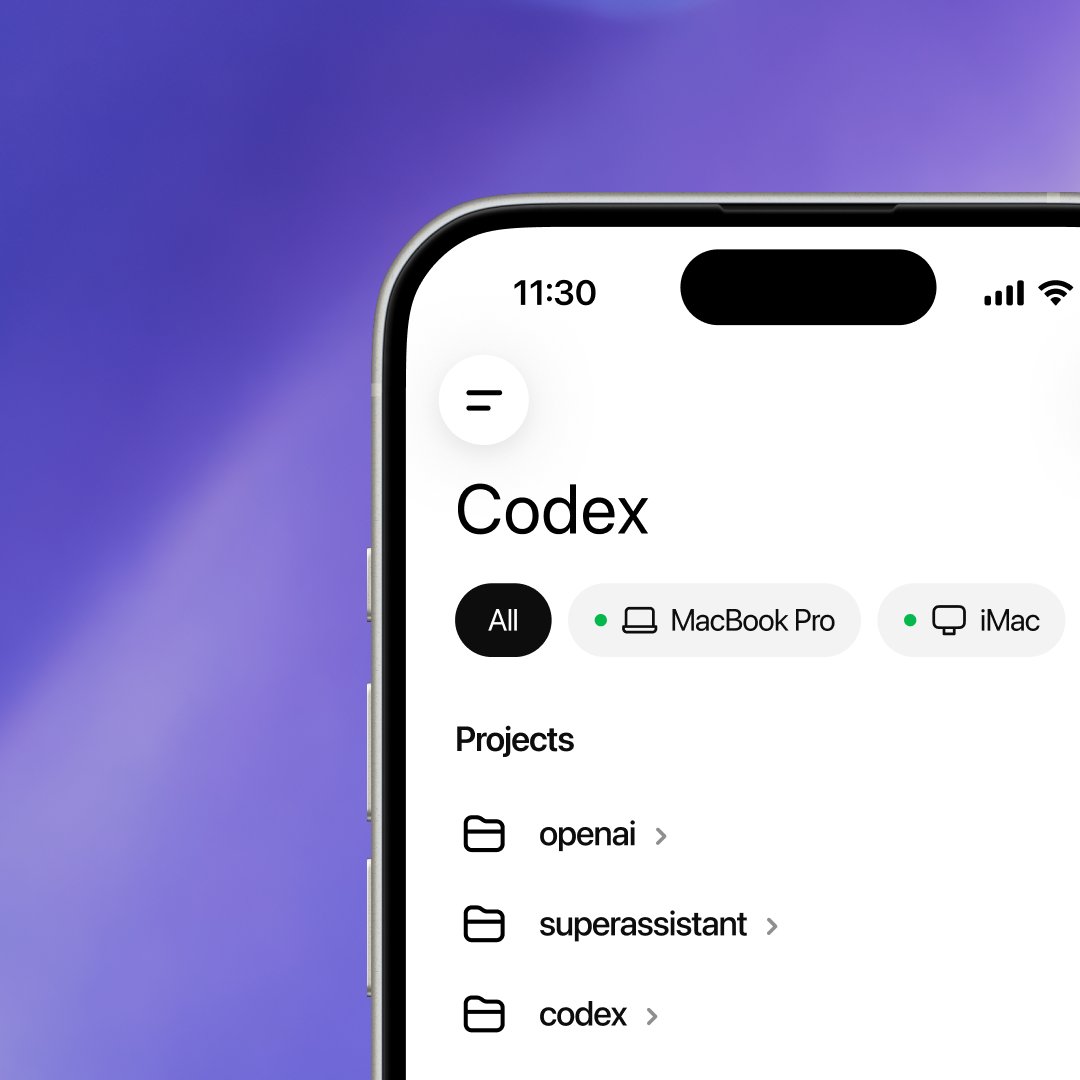
OpenAI Brings Codex to ChatGPT Mobile — Control Your AI Coding Agent from Your Phone
Codex Goes Mobile: Remote Control for AI Coding
OpenAI brought Codex to the ChatGPT iOS and Android apps on May 14, turning phones into a control surface for Codex sessions already running on a desktop, devbox, or remote environment. The phone doesn't process the codebase — it streams real-time updates from wherever Codex is working.
Real-Time Updates: Diffs, Terminal Output, Test Results
Screenshots, terminal output, code diffs, and test results all flow back to the phone in real time. Users can approve or reject each step, keeping human oversight on AI-driven code changes. Files, credentials, and local permissions stay on the host machine, keeping the security model intact.
All Plans, Including Free
The preview rolls out across all ChatGPT plans, including Free and Go. Over 4 million people now use Codex each week, and mobile access extends the agent's reach beyond desktop sessions. Current support covers macOS-hosted Codex sessions; Windows phone connectivity is coming in a future update.
Related Articles
OpenAI announced that Codex, its AI coding agent, is coming to the ChatGPT mobile app, enabling users to write, edit, and debug code directly from their smartphones.
OpenAI on May 7 released three new realtime audio models in its API: GPT-Realtime-2 with GPT-5-class reasoning, GPT-Realtime-Translate for live speech translation across 70+ languages, and GPT-Realtime-Whisper for streaming transcription.
OpenAI launched GPT-Realtime-2, GPT-Realtime-Translate, and GPT-Realtime-Whisper — new voice API models covering live reasoning, real-time translation across 70+ languages, and streaming transcription. The Realtime API is now generally available for production use.
Comments (0)
No comments yet. Be the first to comment!