Samsung targets AI-Driven Factories by 2030 with digital twins and AI agents
Original: Samsung Electronics Announces Strategy To Transition Global Manufacturing Into ‘ AI-Driven Factories’ by 2030 View original →
Samsung said on February 28, 2026 that it plans to transition its global manufacturing operations into AI-Driven Factories by 2030. The announcement stands out because it treats AI as an operating layer for industrial production, not just as a feature inside consumer devices. Samsung is describing a long-term manufacturing transformation that combines simulation, automation, and on-site assistance across its own plants and smart-factory business.
According to the company, the roadmap centers on digital twin simulations, AI agents, and in-factory companion robots. That mix matters because each element addresses a different industrial problem. Digital twins can model site-specific bottlenecks before changes are made in a real plant. AI agents can help coordinate planning and operational decisions across complex production lines. Companion robots can support workers on the factory floor where repetitive physical tasks, inspection steps, and material handoffs still create delays or quality risks.
Samsung also linked the initiative to reinforcement learning and factory optimization work that can adapt to conditions at individual sites. That suggests the company is aiming for plants that do more than execute fixed automation recipes. The goal is a production system that can learn from throughput, defect, and maintenance data and then feed those lessons back into scheduling and process control. For a manufacturer with a global footprint, even small gains in yield or downtime can translate into meaningful financial impact.
Another important detail is that Samsung is grounding the strategy in its own manufacturing operations first. That makes the roadmap more credible than a purely conceptual platform pitch. If the company can deploy these systems inside its semiconductor, device, and electronics production environment, it creates a practical test bed for technologies that could later be sold through its smart-factory business. In effect, Samsung is using its internal operations as both customer and proving ground.
The bigger significance is that industrial AI is moving closer to mainstream capital planning. Samsung's 2030 timeline signals that large manufacturers increasingly view digital twins, AI agents, and robots as core competitiveness tools rather than side experiments. For the broader IT and AI market, that means more demand for factory data platforms, edge compute, machine-vision systems, and software that can safely connect models to physical operations.
Related Articles

Databricks’ Summit recap compresses a broad enterprise AI roadmap into five minutes. The product list includes Genie One, Ontology, App Builder, ZeroOps, LTAP, Unity AI Gateway, Omnigent and CustomerLake.
A security incident tied to model evaluation drew unusually intense HN debate. The real issue is not only the breach, but how far cyber benchmarks can safely push models against realistic infrastructure.
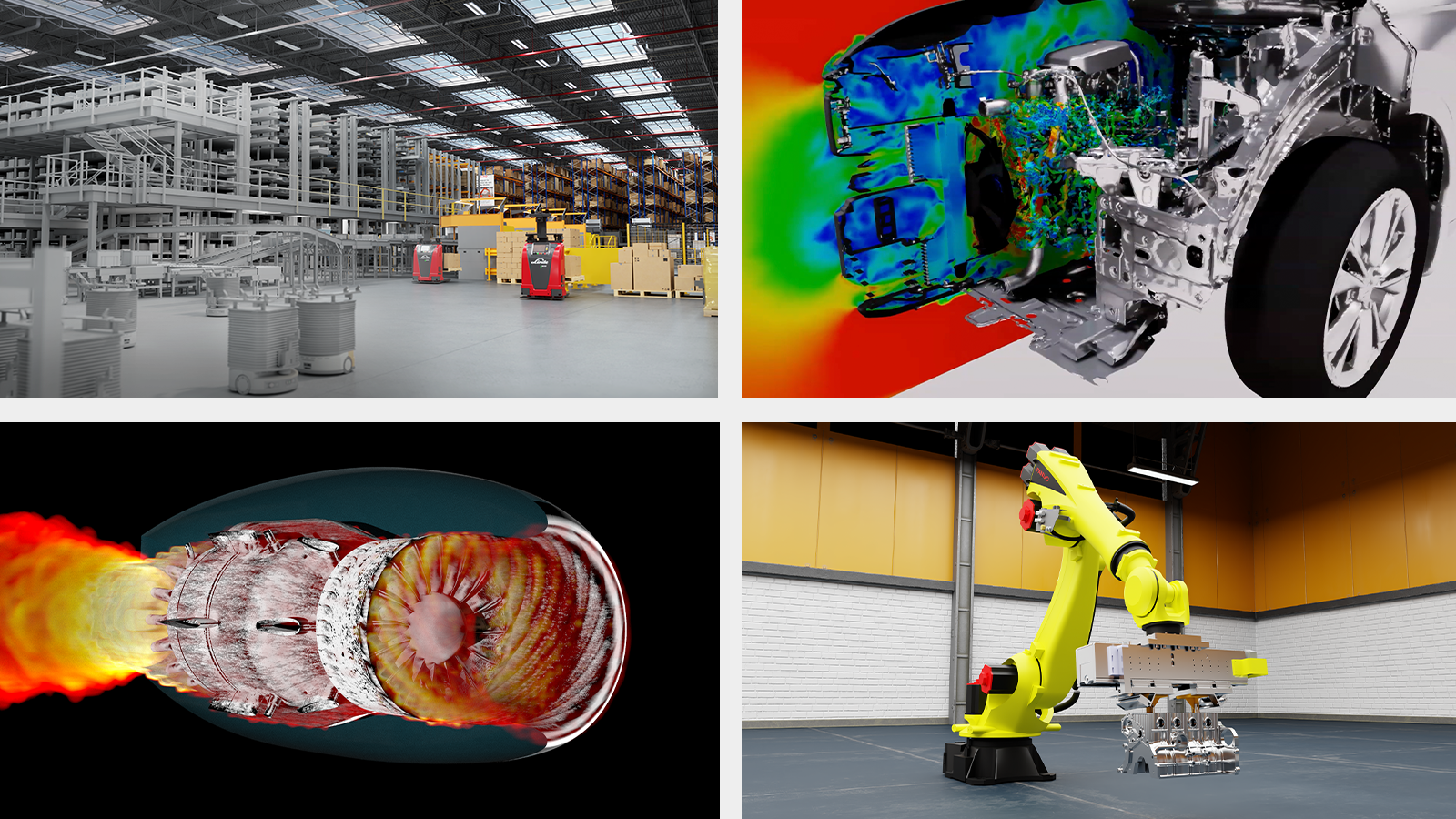
NVIDIA said on March 16, 2026 that Cadence, Dassault Systèmes, PTC, Siemens and Synopsys are bringing NVIDIA-powered AI agents and GPU-accelerated software into industrial workflows. The announcement spans chip design, automotive simulation, digital twins and manufacturing infrastructure across AWS, Google Cloud, Microsoft Azure, OCI and major OEM partners.