Warp open-sources its client and lets Oz run the agent build loop
Original: Warp is now open-source View original →
Warp is not just publishing code; it is turning product development itself into an experiment in open agentic software work. The company says its client is now open-source under AGPL, while the contribution flow shifts toward Oz, Warp's cloud orchestration platform for coding agents. In other words, the repo is open, the roadmap is moving into public GitHub issues, and a large part of the implementation loop is supposed to be handled by agents under human supervision.
That is a more radical move than a standard source-code dump. Warp says OpenAI is the founding sponsor of the repository and that the new management workflows are powered by GPT models. It also says the product already reaches nearly 1 million active developers, which gives the release a much bigger test surface than a typical startup open-source launch. If even a fraction of that base starts filing issues, steering agent work, and verifying patches, Warp will have turned its product community into a live operating layer for software development.
The release also ships product changes aimed at making the open move practical instead of symbolic. Warp added support for more open models including Kimi, MiniMax, and Qwen, plus an auto open routing option that chooses among open models for a task. It also added a settings file for programmatic control and easier portability, and made the interface more configurable across a range that runs from plain terminal use to a fuller agentic development environment with diff views and a file tree.
The business angle is not hidden. Warp says it is competing with heavily funded closed-source rivals and thinks openness is the fastest way to accelerate the product. That makes this release important beyond Warp itself. If the model works, it becomes one of the clearest early examples of humans supervising agents in public to ship a real developer tool, not just a demo repo. If it breaks down, the industry will learn just as quickly where open agentic development still needs more structure.
Related Articles
The final MCP 2026-07-28 specification replaces protocol-level sessions with a stateless core, MRTR, header routing, and updated Tier 1 SDKs. With TypeScript and Python SDKs each past 1 billion downloads, this is an infrastructure-level change for agent tool servers.

GitHub is moving Copilot CLI from one-off terminal help toward versioned team workflows. The new custom agents cover at least four repeated tasks: security audits, release notes, infrastructure reviews, and incident response.
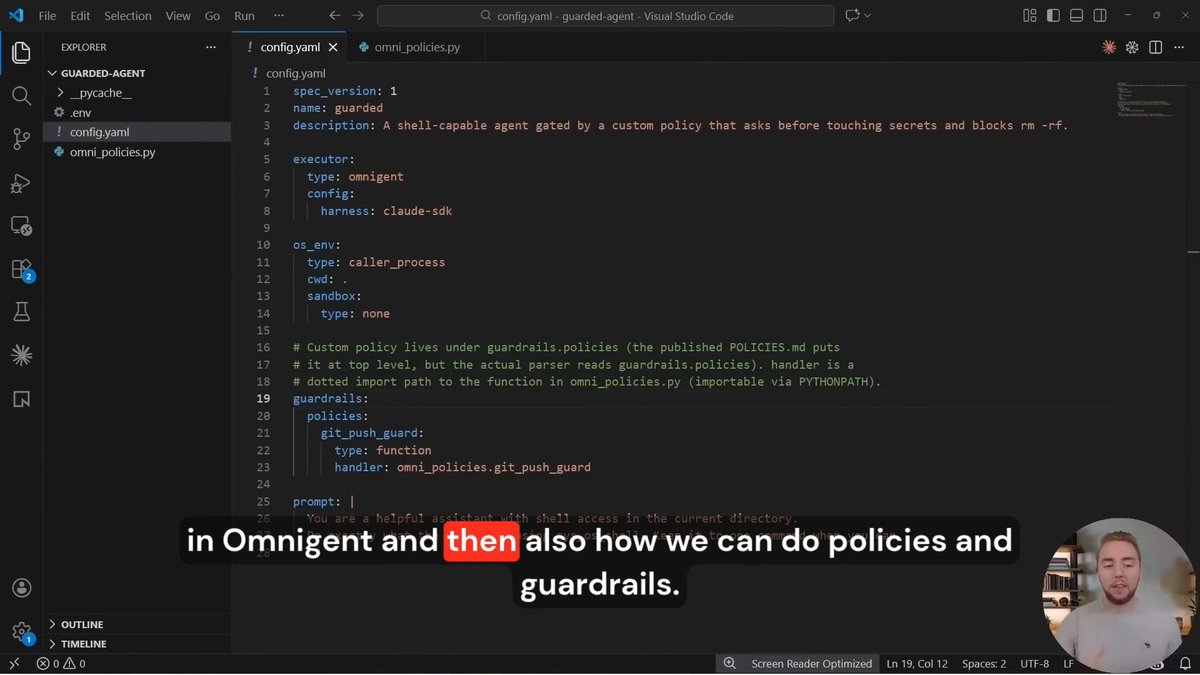
AI coding is shifting from picking one assistant to orchestrating several agents. Omnigent is an open-source meta-harness with shared sessions, guardrails, and human-in-the-loop workflows.