AI Reddit May 5, 2026 1 min read
Jack Clark, Anthropic co-founder, estimates a ~30% chance AI research becomes substantially automated by end of 2027 and ~60%+ by end of 2028, arguing AI doesn't need genius-level creativity to self-improve.
Jack Clark, Anthropic co-founder, estimates a ~30% chance AI research becomes substantially automated by end of 2027 and ~60%+ by end of 2028, arguing AI doesn't need genius-level creativity to self-improve.
Anthropic released ten ready-to-run agent templates for financial services including pitchbook creation, KYC screening, and month-end close. Claude now works directly in Excel, PowerPoint, Word, and Outlook.
Anthropic has agreed to spend $200 billion on Google Cloud services and Broadcom-built TPUs over five years, beginning 2027. The deal accounts for over 40% of Google's disclosed cloud revenue backlog; Alphabet also plans up to $40B in additional investment in Anthropic.
Anthropic launched the Claude Security public beta for Enterprise customers, offering Opus 4.7-powered codebase scanning that auto-generates targeted patch suggestions, exports findings to CSV or Markdown, and integrates with Slack and Jira.
Anthropic announced a $1.5B joint venture with Blackstone, Goldman Sachs, and H&F to sell AI tools to enterprise; minutes later, OpenAI closed $4B+ for a rival Deployment Company. Both target PE-backed firms as the primary channel.
Anthropic partnered with Blackstone, Hellman & Friedman, Goldman Sachs, and others to create a $1.5 billion enterprise AI services firm. The new company embeds Anthropic engineers directly inside mid-market companies in healthcare, manufacturing, and financial services.
Anthropic unveiled Claude Opus 4.7 and ten pre-built financial services AI agents at an invite-only Wall Street briefing on May 5, alongside full Microsoft 365 integration and a Moody's data partnership covering 600 million businesses.
The U.S. Department of Defense struck agreements with seven tech companies to deploy AI on its highest-security networks on May 1. Anthropic, which insisted on safety guardrails against autonomous weapons, is conspicuously absent.
Anthropic is weighing a fresh funding round at a $900B+ valuation that would leapfrog OpenAI. The company's annualized revenue run rate has surpassed $30 billion, tripling from $9B just months ago.
The U.S. Department of Defense finalized AI deployment agreements with OpenAI, Google, Microsoft, AWS, NVIDIA, SpaceX, Reflection AI, and Oracle for its most classified networks. Anthropic was excluded after refusing to allow Claude to be used for purposes including autonomous weapons and mass surveillance.
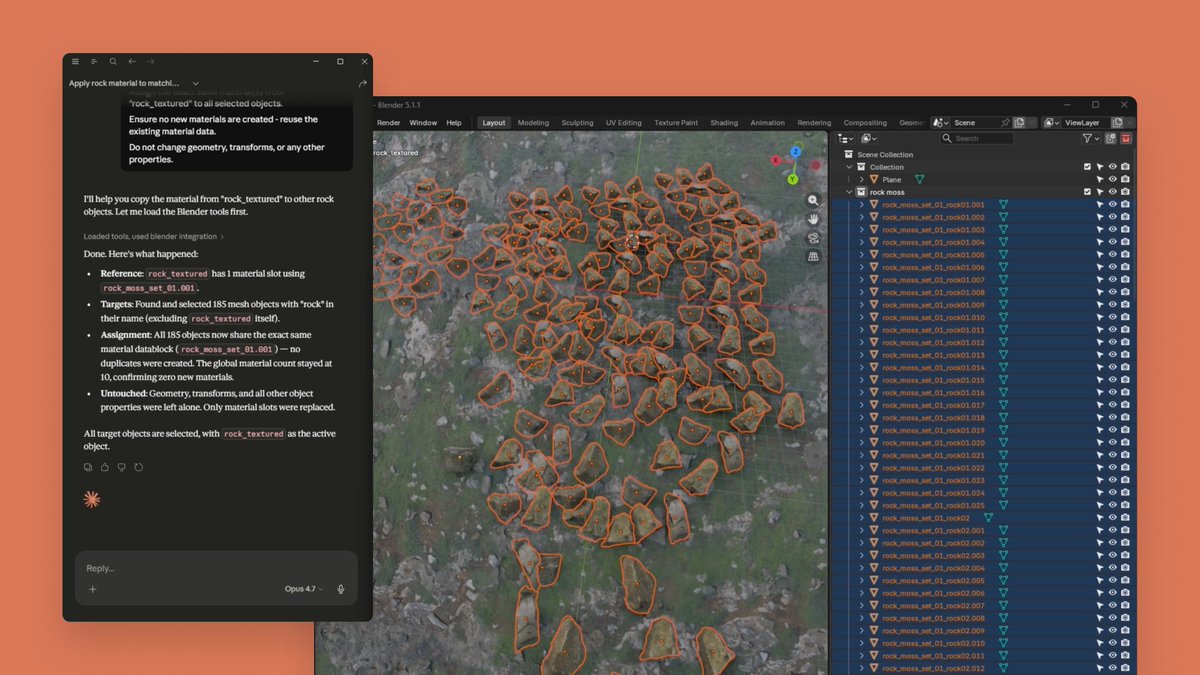
Anthropic unveiled 9 connectors linking Claude directly to creative professional tools including Blender, Adobe Creative Cloud, and Autodesk Fusion. Creators can now debug scenes, batch-process images, and automate music production through natural language commands.
The r/singularity community found that Claude Mythos can generate image outputs, reportedly marking Anthropic's first foray into image generation models.