AGIBOT links 5 robot platforms to 8 embodied AI models
Original: AGIBOT Unveils New Generation of Embodied AI Robots and Models, Accelerating Real-World Deployment of Physical AI View original →
Embodied AI is shifting from single-robot demos toward full deployment stacks. At its 2026 Partner Conference, AGIBOT introduced 5 robotic platforms and 8 foundational AI products under a system it calls One Robotic Body, Three Intelligences, spanning locomotion, manipulation, and interaction.
The hardware list is unusually broad. AGIBOT A3 is a 173 cm, 55 kg humanoid platform aimed at interactive environments. The company cites 10-hour endurance, a 10-second battery swap, UWB centimeter-level swarm positioning for synchronized 100-robot performances, shoulder tactile sensing, and 360-degree multi-array microphones. That positions A3 less as a factory arm and more as a humanoid for entertainment, education, and customer-facing work.
AGIBOT G2 Air targets a different labor category. It is a single-arm mobile manipulator with 7 DOF, 3 kg payload, 750-800 mm reach, sub-800 mm width, and at least 1.5 m/s speed. AGIBOT pitches it for retail, hospitality, logistics, and structured industrial workflows where a compact robot can work near people. The company also says the system captures task data during execution, tying assisted operation to future autonomy.
The manipulation lineup goes deeper than a single gripper. OmniHand 3 Ultra-T uses a 22+3 DOF tendon-driven system, weighs 500 g, claims a 10:1 load-to-weight ratio, and includes full-hand 3D tactile sensing, a palm camera, and sub-0.3 second response time. AGIBOT also named OmniPicker 3, an industrial gripper with 140 N force and 1,000,000-cycle durability, plus OmniHand 3 Lite for more rugged use.
For field work, D2 Max is described as an all-terrain Level 3 autonomous quadruped for security patrol, industrial inspection, emergency rescue, logistics, agriculture, and education. The fifth piece, MEgo, is not a robot body at all. It is a body-free data collection system using a gripper and view module to capture synchronized vision, motion, and tactile data across factories, retail sites, and homes. That matters because data remains one of the hardest constraints in physical AI.
The model layer is just as important to the story. AGIBOT listed BFM for motion imitation from a single demonstration or short video, GCFM for turning text, audio, or video into robot motions, AGIBOT WORLD 2026 as an open-source real-world dataset, GO-2 for planning and execution with Action Chain-of-Thought, GE-2 for interactive virtual worlds, Genie Sim 3.0 for simulation, SOP for online learning from deployed fleets, and WITA Omni for multimodal robot interaction.
The claim to watch is not any single spec. It is whether AGIBOT can connect hardware, real-world data, simulation, and fleet learning at commercial scale. The company says it rolled out its 10,000th robot in March 2026, which gives this launch more weight than a lab prototype. The practical test will be measurable productivity in industrial, logistics, retail, security, and service workflows, not stage performance.
Related Articles
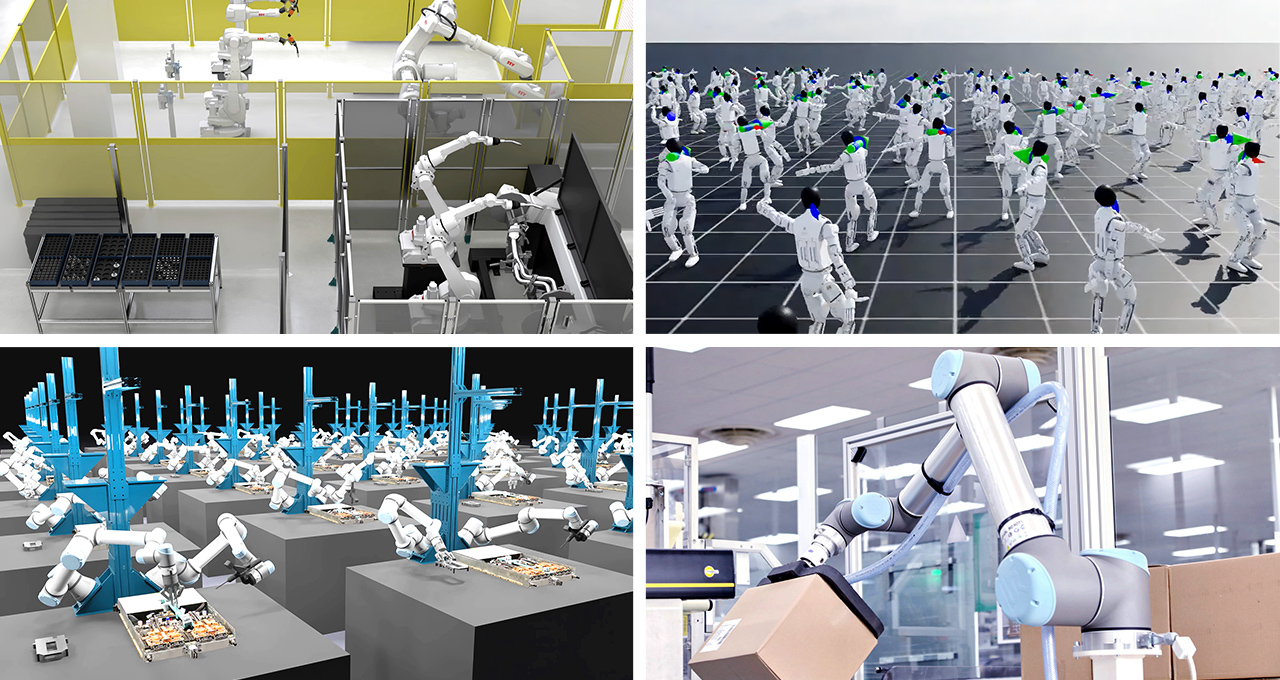
NVIDIA said on March 16, 2026 that ABB, FANUC, Figure, KUKA, Skild AI and other robotics players are building on Cosmos, Isaac and GR00T to move physical AI from simulation into production. The release also introduced Cosmos 3, Isaac Lab 3.0 in early access, and commercial early access for GR00T N1.7.
Google DeepMind announced Gemini Robotics-ER 2 on January 8, 2026, highlighting improved data efficiency and real-world action performance. The update targets a core robotics bottleneck: reliable generalization from training to physical environments.
Generalist says GEN-1 crosses a commercial threshold for simple physical tasks by combining higher success rates, faster execution, and lower task-specific robot data requirements.