Figure F.03 climbs a ladder autonomously in a harder humanoid mobility test
Original: Figure F.03 climbs a ladder fully autonomously in a new humanoid mobility test View original →

Beyond flat-ground walking
For humanoid robots to work in factories, homes, and hazardous sites, they need mobility skills beyond clean floors. Figure founder Brett Adcock wrote on X: "F.03 can now climb a ladder, fully autonomous." The source video is available on X.
The text is short, but the signal is concrete. FxTwitter data shows the post was created on August 1, 2026 at 15:30 UTC and includes a roughly 44-second video. At review time it had 5,367 likes, 485 reposts, and about 399,941 views, and the Figure_robot account had reposted it. This is not a formal product release; it is a founder-led capability demonstration.
Ladder climbing is difficult because it combines perception, hand placement, foot placement, body balance, and timing in a narrow physical structure. A missed rung or unstable grip can make the entire behavior fail. Recent robotics papers treat ladder climbing as a challenging benchmark for whole-body control because sparse footholds and handholds leave little margin for error. That is why the Figure F.03 clip matters more than another walking video: it points to a wider mobility envelope for industrial inspection, warehouse work, emergency response, and other built environments where ladders remain common.
Adcock’s account regularly surfaces Figure progress before it appears in longer company materials. The next thing to watch is repeatability. Figure will need to show different ladder angles, lighting conditions, rung shapes, payloads, and recovery from slips or blocked placements before the demo becomes strong evidence for field deployment.
Related Articles

Humanoid robotics is shifting from short demo wins to repeatable stress tests. Brett Adcock posted a two-hour F.03 stair-walking timelapse, with the attached video served as a roughly 694-second clip.
Figure published new Helix 02 results on March 9, 2026 showing a single neural system cleaning an entire living room from pixels. Figure says the system combines walking, object handling, tool use and real-time planning without introducing new task-specific algorithms.
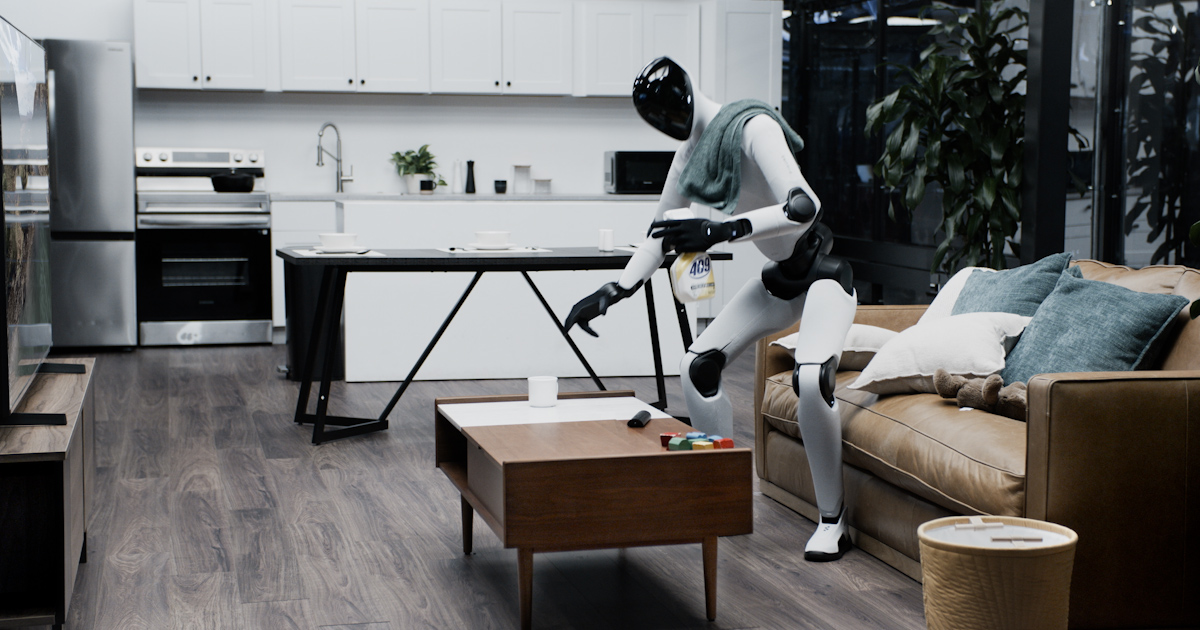
Figure used a March 9, 2026 X post and companion article to show Helix 02 cleaning up a living room fully autonomously. By moving from the January Helix 02 kitchen demonstration into a messier home setting, the company is making a stronger case for long-horizon humanoid autonomy beyond tightly structured environments.