Microsoft expands Foundry and Azure AI at GTC with agent GA, Nemotron access, and Physical AI tooling
Original: Microsoft at NVIDIA GTC: New solutions for Microsoft Foundry, Azure AI infrastructure and Physical AI View original →
Microsoft turns GTC into a broader Foundry and Azure AI push
Microsoft said on March 16, 2026 that it is expanding Microsoft Foundry, Azure AI infrastructure, and Physical AI workflows as part of its NVIDIA GTC announcements. The company described Foundry as the operating system for building, deploying, and operating AI at enterprise scale, and used the event to move several pieces of that stack from announcement phase into production.
The most immediate change is that the next-generation Foundry Agent Service and Observability in the Foundry Control Plane are now generally available. Microsoft says this gives developers production-grade tools for building agents that can reason, plan, and act across workflows while also exposing runtime behavior for debugging, governance, and trust. It paired that GA step with public preview access for Voice Live API integration with Foundry Agent Service, making room for voice-first, multimodal, real-time agent experiences.
Models, infrastructure, and regulated environments
Microsoft also said NVIDIA Nemotron models are now available through Microsoft Foundry, alongside a widened model catalog that already includes frontier and open-weight systems. On the infrastructure side, Microsoft said it has deployed hundreds of thousands of liquid-cooled Grace Blackwell GPUs across its global datacenter footprint in less than a year. The company also said it is the first hyperscale cloud to power on NVIDIA Vera Rubin NVL72 in its labs, with rollout into Azure datacenters planned over the next few months.
For sovereign and regulated deployments, Microsoft announced initial support for the NVIDIA Vera Rubin platform on Azure Local. That matters because customers increasingly want reasoning-heavy and agentic systems in environments where they control locality, governance, and upgrade timing rather than accepting a cloud-only operating model.
Physical AI becomes a first-class workflow
The third pillar is Physical AI. Microsoft said it is introducing a public Azure Physical AI Toolchain GitHub repository integrated with NVIDIA’s Physical AI Data Factory blueprint and core Azure services. It is also deepening the connection between Microsoft Fabric and NVIDIA Omniverse libraries so organizations can connect live operational data to digital twins and simulation environments.
- Foundry Agent Service and Observability in the Foundry Control Plane are now generally available.
- Voice Live API integration for Foundry Agent Service is in public preview.
- NVIDIA Nemotron models are now available through Microsoft Foundry.
- Microsoft says Azure is already powering on NVIDIA Vera Rubin NVL72 in its labs and extending support to Azure Local.
Seen together, the announcements show Microsoft trying to close the gap between prototype agents, inference infrastructure, and real-world industrial deployment. The message from GTC is that enterprise AI platforms are being shaped not only by model access, but by observability, deployment control, and how well they connect digital reasoning to physical systems.
Source: Microsoft
Related Articles
On March 16, 2026, Microsoft used NVIDIA GTC to expand Foundry Agent Service and observability, add NVIDIA Nemotron models, outline Azure infrastructure built for inference-heavy reasoning workloads, and introduce an Azure Physical AI Toolchain. The announcement is notable because it connects agent operations, hyperscale AI infrastructure, and physical-world systems in one stack.
The U.S. Department of Defense struck agreements with seven tech companies to deploy AI on its highest-security networks on May 1. Anthropic, which insisted on safety guardrails against autonomous weapons, is conspicuously absent.
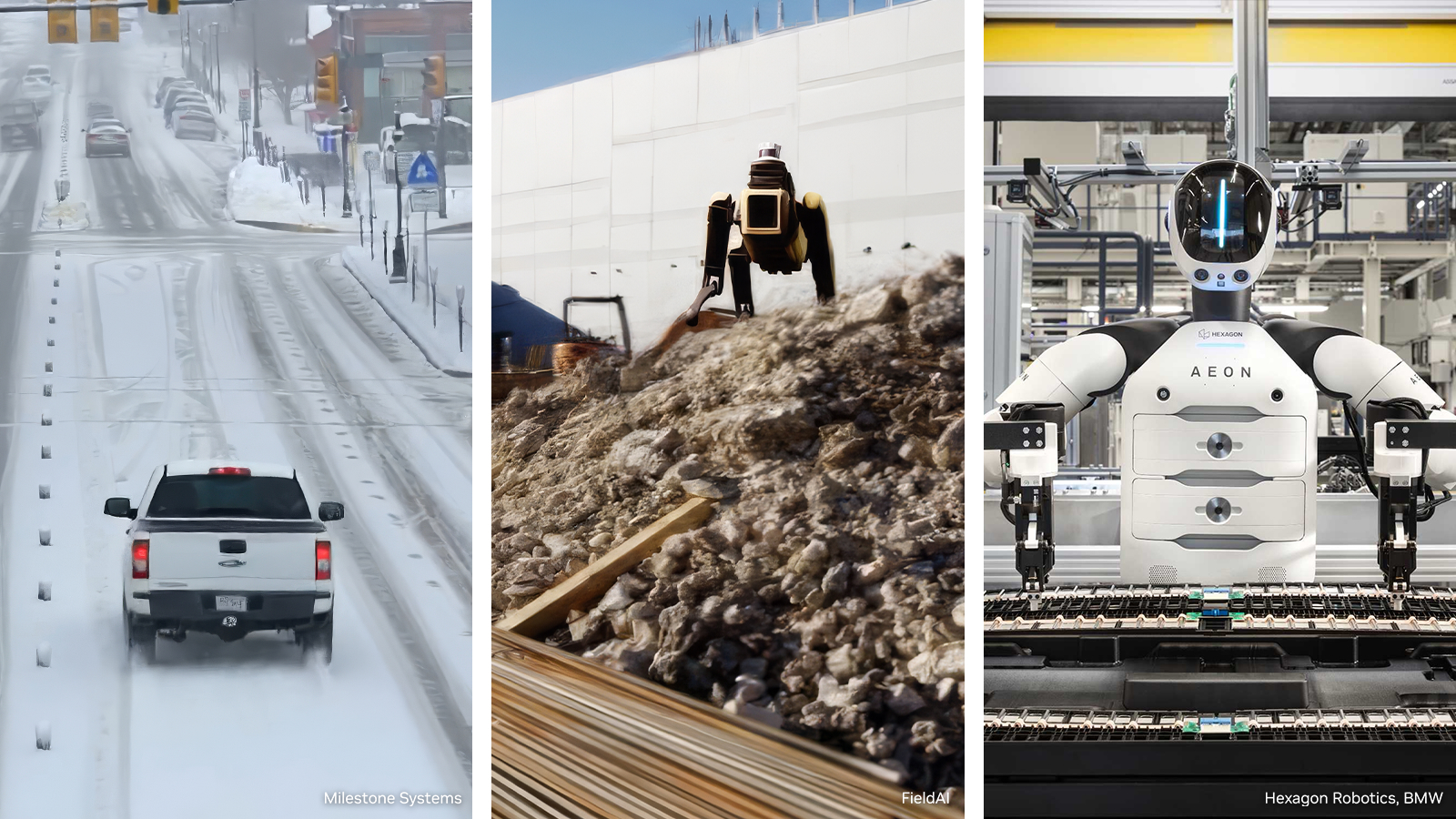
NVIDIA on March 16, 2026 introduced an open reference architecture for generating, augmenting and evaluating training data for robotics, vision AI agents and autonomous vehicles. Microsoft Azure and Nebius are integrating the blueprint, and NVIDIA said the package is expected to land on GitHub in April.
Comments (0)
No comments yet. Be the first to comment!