NVIDIA MotionBricks runs 350,000 motion clips at 15,000 FPS
Original: NVIDIA MotionBricks reports 350,000 motion clips at 15,000 FPS View original →

MotionBricks matters because it targets a stubborn production problem: making neural motion generation fast and controllable enough for real-time characters, simulation, and robotics. NVIDIA AI posted the SIGGRAPH 2026 paper, demos, and code on June 11, 2026 at 22:16 UTC.
The tweet led with the numbers: 350,000+ motion clips. 15,000 FPS. FxTwitter showed roughly 81,000 views and 978 likes. The linked project page adds that MotionBricks reaches 2 ms latency and uses a single neural backbone over more than 350,000 motion skills.
The research page describes a modular latent generative backbone paired with smart primitives. The claim is that applications can compose navigation and object-interaction behavior without per-task tagging, fine-tuning, or expert hand-authored animation transitions. NVIDIA’s UE5 demo description says every motion is generated by neural networks, without foot-locking, blending, collision detection, or hand-authored transitions.
NVIDIA AI’s account regularly surfaces research releases, developer tools, and GPU-accelerated AI workflows. This post stands out because it provides reproducible hooks: a paper page, demos, and code rather than only a clip. The next things to watch are external replication, how well the method holds up across different rigs and robot bodies, and whether the 15,000 FPS figure remains meaningful in full game-engine or robotics-control loops. Source tweet
Related Articles
NVIDIA’s SIGGRAPH update shifts physical AI from cloud demos toward edge deployment. The package includes the 4B Cosmos 3 Edge world model, a Synthetic Video Detector NIM microservice, and a DGX Station agent stack built around Nemotron 3 Ultra.

AI infrastructure competition is being measured in training throughput, not just chip availability. NVIDIA says Blackwell Ultra reached 1,648 TFLOPs per GPU on DeepSeek-V3 671B, about 3x prior delivered performance.
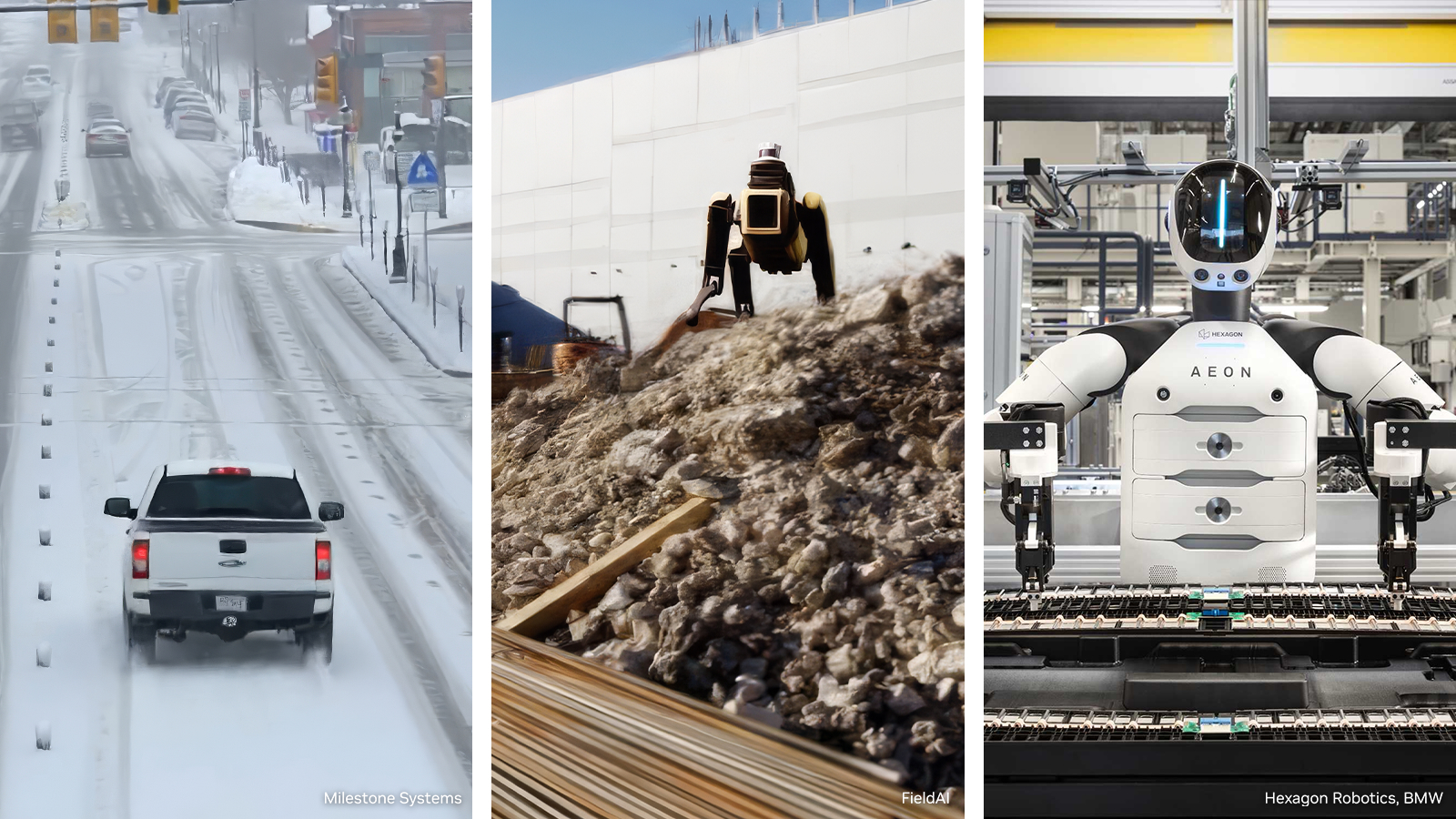
NVIDIA on March 16, 2026 introduced an open reference architecture for generating, augmenting and evaluating training data for robotics, vision AI agents and autonomous vehicles. Microsoft Azure and Nebius are integrating the blueprint, and NVIDIA said the package is expected to land on GitHub in April.