AI Hacker News Apr 24, 2026 2 min read
HN did not read Google’s TorchTPU post as another cloud pitch. The real question in the thread was whether a PyTorch user can really switch to `tpu` without falling back into the old PyTorch/XLA pain cave.
HN did not read Google’s TorchTPU post as another cloud pitch. The real question in the thread was whether a PyTorch user can really switch to `tpu` without falling back into the old PyTorch/XLA pain cave.
Google is signaling that enterprise AI is moving from demos to operational scale. In its April 22 Cloud Next update, the company said customer API traffic has risen to more than 16 billion tokens per minute and that just over half of its 2026 machine-learning compute investment will go to the Cloud business.
Why it matters: retrieval stacks are being pulled from text-only search into multimodal memory. Google AI Studio said Gemini Embedding 2 is generally available and covers text, image, video, audio, and documents through one model path.
Google has put Deep Research on Gemini 3.1 Pro, added MCP connections, and created a Max mode that searches more sources for harder research jobs. The April 21 preview targets finance and life sciences teams that need web evidence, uploaded files and licensed data in one workflow.
TNW reports that Google is discussing two AI chips with Marvell: a memory processing unit and an inference-focused TPU. No contract is signed yet, but the talks show how serving models, not just training them, is driving custom silicon strategy.
Google made AI Mode in Chrome available in the U.S. with a side-by-side browser layout and richer context input. Users can open web pages next to AI Mode, ask follow-up questions against the page and web, and add recent tabs, images, or PDFs into the same search flow.
Google is rolling out Skills in Gemini in Chrome so users can save prompts and rerun them on the current page or selected tabs. The feature starts on Mac, Windows, and ChromeOS for English-US desktop users, with confirmations before actions like adding calendar events or sending email.
Google has turned Gemini into a native Mac resident instead of a browser tab, with Option + Space bringing up the assistant and screen sharing extending it to whatever is open on the desktop. The April 15 launch also makes the app free globally for machines running macOS 15 or later.
Google is no longer treating AI memory as a niche add-on. By bringing Gemini Personal Intelligence to India, it is testing whether a model that reads Gmail, Photos, and watch history can become a daily assistant in one of its biggest markets.
On April 8, 2026, Gemini introduced notebooks as a new project layer for grouping past chats, files and instructions. Google says notebooks sync with NotebookLM and are rolling out first on the web for Google AI Ultra, Pro and Plus subscribers.
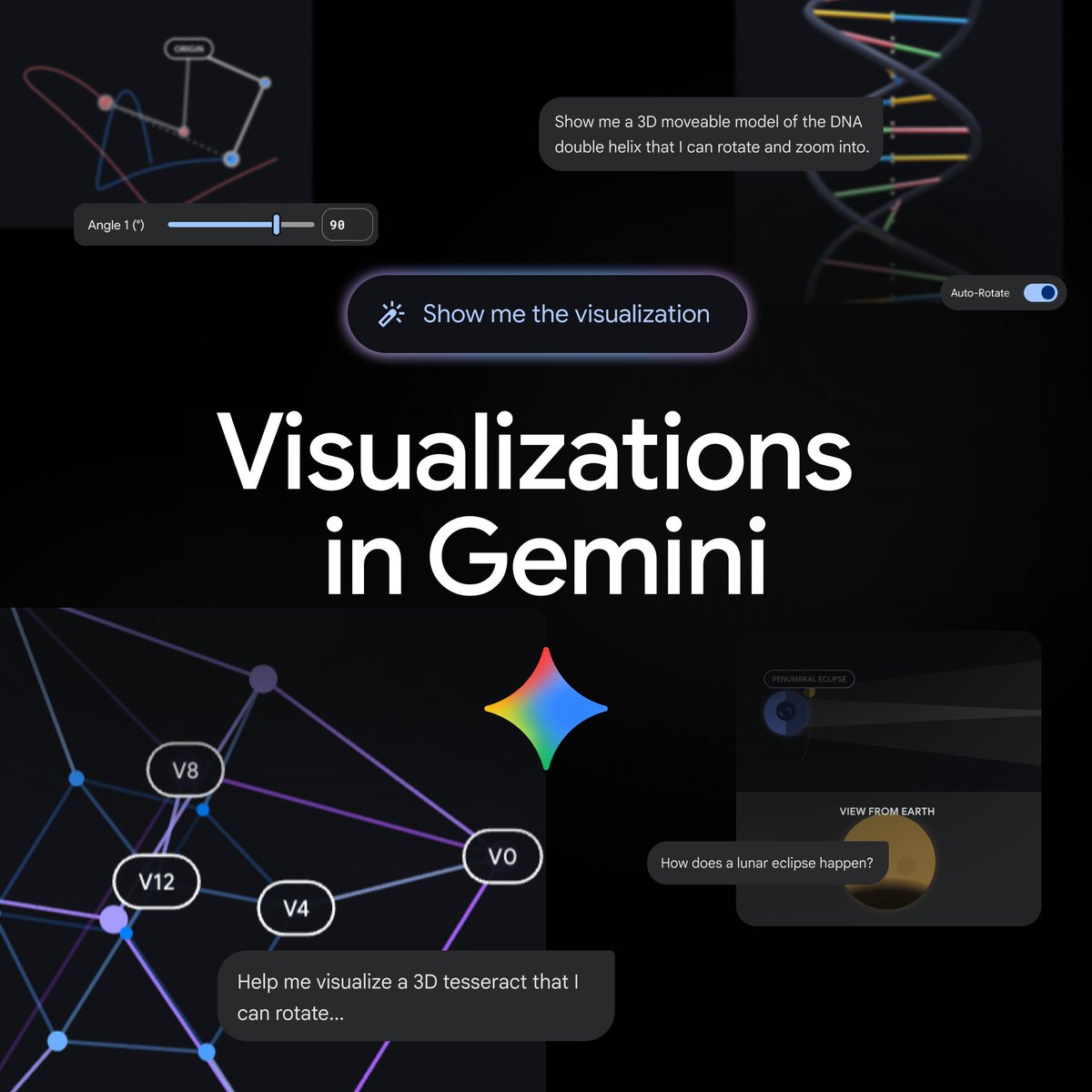
On April 9, 2026, Gemini said it can now generate interactive visualizations directly in chat. Google’s product page says the rollout adds functional simulations, adjustable parameters and 3D exploration to the Gemini app for global users on the Pro model.

On April 10, 2026, Google said restaurant booking in AI Mode is expanding beyond the U.S. for the first time, adding eight markets. The move extends Google Search’s agentic reservation flow from a U.S. experiment into a broader international commerce surface.